
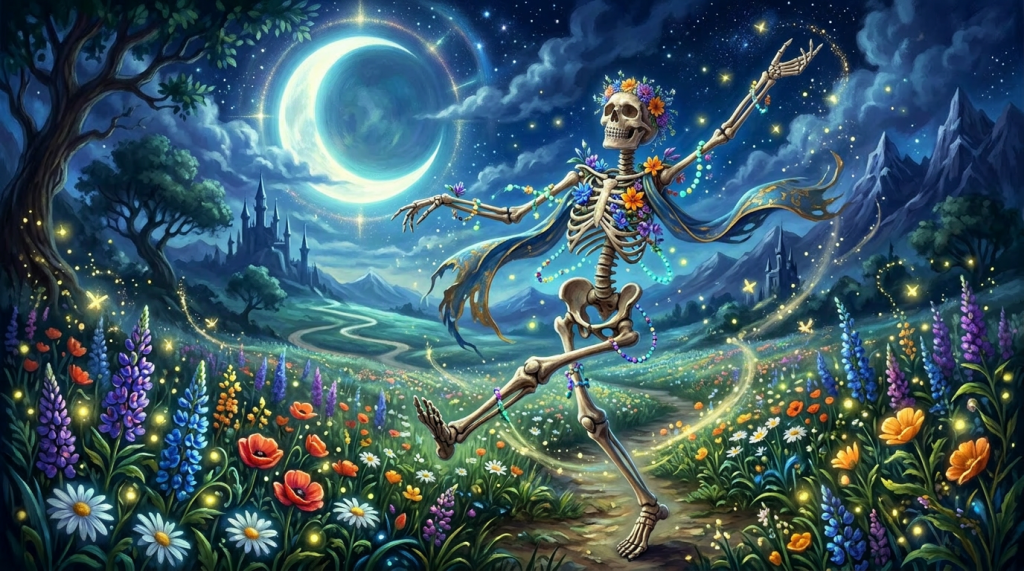
The Death card is one of the most feared cards in the Tarot, but it’s also one of the most misunderstood. People see the name and immediately brace themselves, imagining loss, disaster, or something terrible waiting around the corner. But the Death card is not here to frighten you. It’s here to free you. It’s the moment life whispers, “This part is done. You can stop carrying it now.” And that whisper is far more compassionate than it is cruel.
In my own life, the Death card has shown up during times when I was holding on too tightly to something that had already ended… relationships that had run their course, identities I’d outgrown, ways of living that no longer fit who I was becoming. It didn’t arrive to punish me. It arrived to help me breathe again. To help me stop forcing what was already finished. To help me step into a version of myself that had been waiting patiently for me to catch up.
Death Is the End of Pretending
The Death card appears when you’ve reached the point where you can no longer pretend something is working. It’s the moment you stop telling yourself stories to keep the peace, to keep the routine, to keep the illusion that everything is fine. Death is the quiet, steady truth rising to the surface — the truth you’ve known for longer than you admit. It’s the moment you finally say, “I can’t do it like this anymore.”
This isn’t dramatic. It’s honest. And honesty is a form of liberation. When Death shows up, it’s not dragging you into chaos, it’s guiding you out of it. It’s helping you release the emotional labour of holding together something that’s already unravelled. It’s the card that says, “You don’t have to keep carrying this weight. You’re allowed to let go.”
Death Is Completion, Not Destruction
We’re conditioned to fear endings, but the Death card doesn’t represent destruction. It represents completion — the natural closing of a chapter that has taught you everything it was meant to teach. It’s the final page of a story you’ve been reading long after the plot stopped making sense. It’s the moment you realise you’ve been living in a version of yourself that no longer feels like home.
Completion can be tender. It can be bittersweet. It can be full of grief and relief at the same time. But it’s never empty. When something completes, it creates space, space for clarity, space for healing, space for the next version of you to step forward. Death is the card that clears the emotional clutter so you can finally see what’s possible.
Death Asks: What Are You Still Carrying That’s Already Over?
One of the most compassionate teachings of the Death card is its invitation to examine what you’re still carrying out of habit, fear, or loyalty to an old version of yourself. Sometimes we hold onto things because they once kept us safe, patterns, roles, relationships, expectations. But safety and stagnation can look very similar when you’ve outgrown them.
Death gently asks you to look at what’s already energetically finished. It doesn’t demand that you throw anything away. It simply asks you to notice. And in that noticing, you often realise that the thing you’re clinging to is the very thing blocking your next chapter. Death isn’t here to take anything from you. It’s here to help you stop taking from yourself.
Death Is the Threshold Between Who You Were and Who You’re Becoming
Every major transformation in life has a Death moment, the threshold between the old self and the emerging self. It’s the space where you’re no longer who you were, but not yet who you’re becoming. This in‑between can feel uncomfortable, uncertain, even disorienting. But it’s also sacred. It’s where growth happens. It’s where truth settles. It’s where you meet yourself again.
The Death card honours this threshold. It doesn’t rush you across it. It doesn’t demand clarity before you’re ready. It simply stands beside you, holding the door open, reminding you that you don’t have to stay in a life that no longer fits. You’re allowed to evolve. You’re allowed to change. You’re allowed to step into the next version of yourself without apologising for outgrowing the last.
Death Holds Both Grief and Relief
Endings are rarely clean. You can grieve something deeply and still know it needed to end. You can feel relief and still feel sad. You can honour what was while acknowledging that it can’t continue. The Death card makes space for all of this. It doesn’t ask you to choose between emotions. It allows you to feel them all without judgement.
This is where the Death card becomes profoundly healing. It validates the complexity of endings. It reminds you that letting go doesn’t mean you failed, it means you’re listening. It means you’re honouring your truth. It means you’re choosing a life that aligns with who you are now, not who you were then. And that is one of the bravest things a person can do.
Death Clears Space for What’s Meant for You
The Death card is never just about what’s leaving. It’s about what can finally arrive once you stop clinging to what’s already gone. It’s the emotional exhale after years of holding your breath. It’s the moment you realise that endings aren’t punishments, they’re openings. They’re invitations. They’re the universe making room for something that matches your current self, not your past self.
When Death appears, it’s a sign that you’re ready, even if you don’t feel ready. Ready to release. Ready to soften. Ready to trust. Ready to step into a life that feels more aligned, more honest, more spacious. Death is not the end of your story. It’s the end of a chapter that can’t carry you where you’re going next.
So What Does the Death Card Really Mean?
It means something is complete. It means you already know what it is. It means you’re being invited to stop fighting the ending. It means you’re allowed to grieve and still move forward. It means there is more life waiting for you, not less.
And that, my dear, darling Spicy Soul, is everything.


Leave a comment